Ukraine – Emergency
Location: National programme.
Context:
The humanitarian situation in Ukraine remains severe, with continued missile attacks, large-scale displacement, and worsening socio-economic conditions. The war has heightened vulnerabilities in families and increased child protection risks. Families in remote rural areas, particularly foster families, face limited access to services to continue providing quality childcare. Women and girls especially face the increased risk of violence, including sexual exploitation, abuse, human trafficking, and domestic violence. According to OCHA, 3.6 million people (90% women and girls) in Ukraine need gender-based violence prevention and response services. The mental health needs of Ukrainians have significantly increased due to the conflict. Families near the frontline or fleeing conflict zones are particularly vulnerable. The conflict has led to widespread stress, anxiety, fear, and trauma, with children especially affected by separation from their parents, exposure to violence, and disrupted education. Common mental health issues among children observed by SOS Ukraine’s psychologists include age regression, socialisation difficulties, fear, sleep disturbances, and boys, in particular, show increased aggression, and younger children often develop speech difficulties.
Program Description:
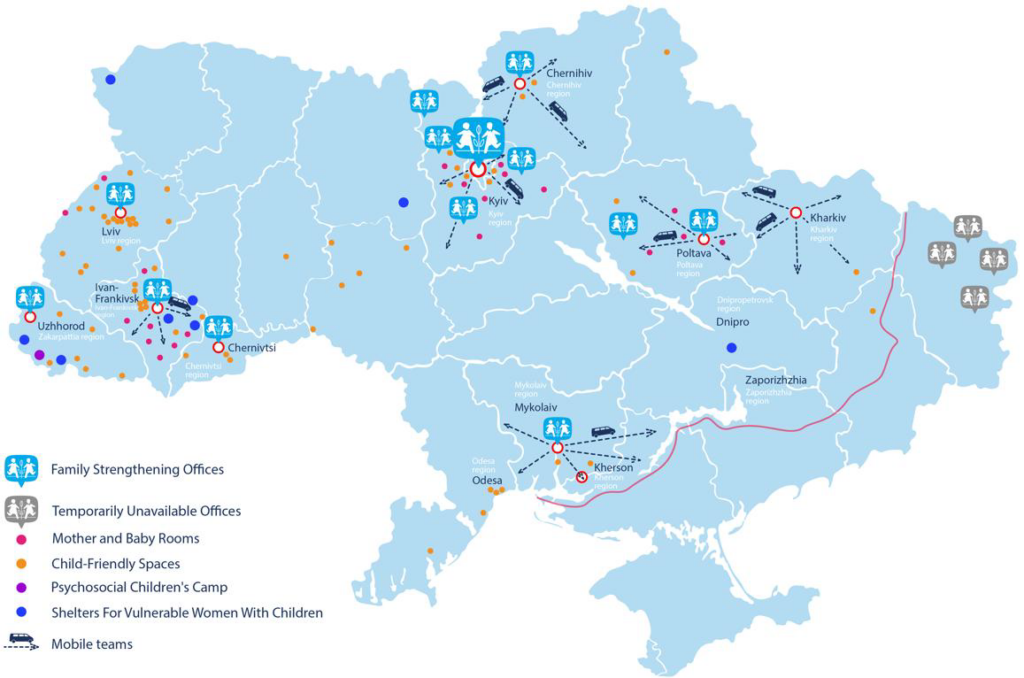
SOS Ukraine adapts its programmes to meet both emergency needs and long-term resilience-building efforts, through strengthening families and ensuring children’s protection and psychosocial well-being. SOS Ukraine is delivering Mental Health and Psychosocial support through mobile health teams, treating and referring children with injuries, doing cash and voucher assistance, family strengthening through multi-sectoral social centres, providing alternative care and supporting foster families and supporting and implementing through local, community-based partners.
SOS Ukraine engage with governmental and non-governmental partners, actively participates in national child protection reforms and humanitarian coordination efforts. The organisation plays a key role in the National Coordination Centre on Child Rights, advocating for policies supporting family- based care and preventing the re-establishment of institutional orphanages. At the regional level, collaboration with local NGOs and municipalities ensures that services reach internally displaced families, vulnerable children, and those with disabilities.
Overall Goals
- Holistic support and assistance to children affected by the war and their families/caregivers, according to their needs.
- Improve mental health and psychosocial well-being for children and their caregivers.
- Specialists are trained and supervised, and demonstrate improvement in knowledge and competence in MHPSS.
- Households receiving cash support are able to cover their basic needs.
- Foster caregivers/specialists are trained and supervised, and demonstrate improvement in knowledge and competence in alternative care.
- Children and young people receive non-formal education increased knowledge and skills.
Key Facts Ukraine:
- Population (2024): 37,000,000*
- Population under 18 years old (2023): 7.3 million**
- Life expectancy (2022): 68.5 years***
- Percentage under national poverty level (2022): 24.2%****
33,180
Children reached
2024
Funding Duration
* Source: U.N. Dept. of Economic and Social Affairs
** Before the full-scale invasion, source: Statista
*** Before the full-scale invasion, source: theWorld Bank
**** Source: The World Bank